

Overview
What is CodecFlow?
Section titled “What is CodecFlow?”CodecFlow is an open-source infrastructure stack for robotics and physical AI.
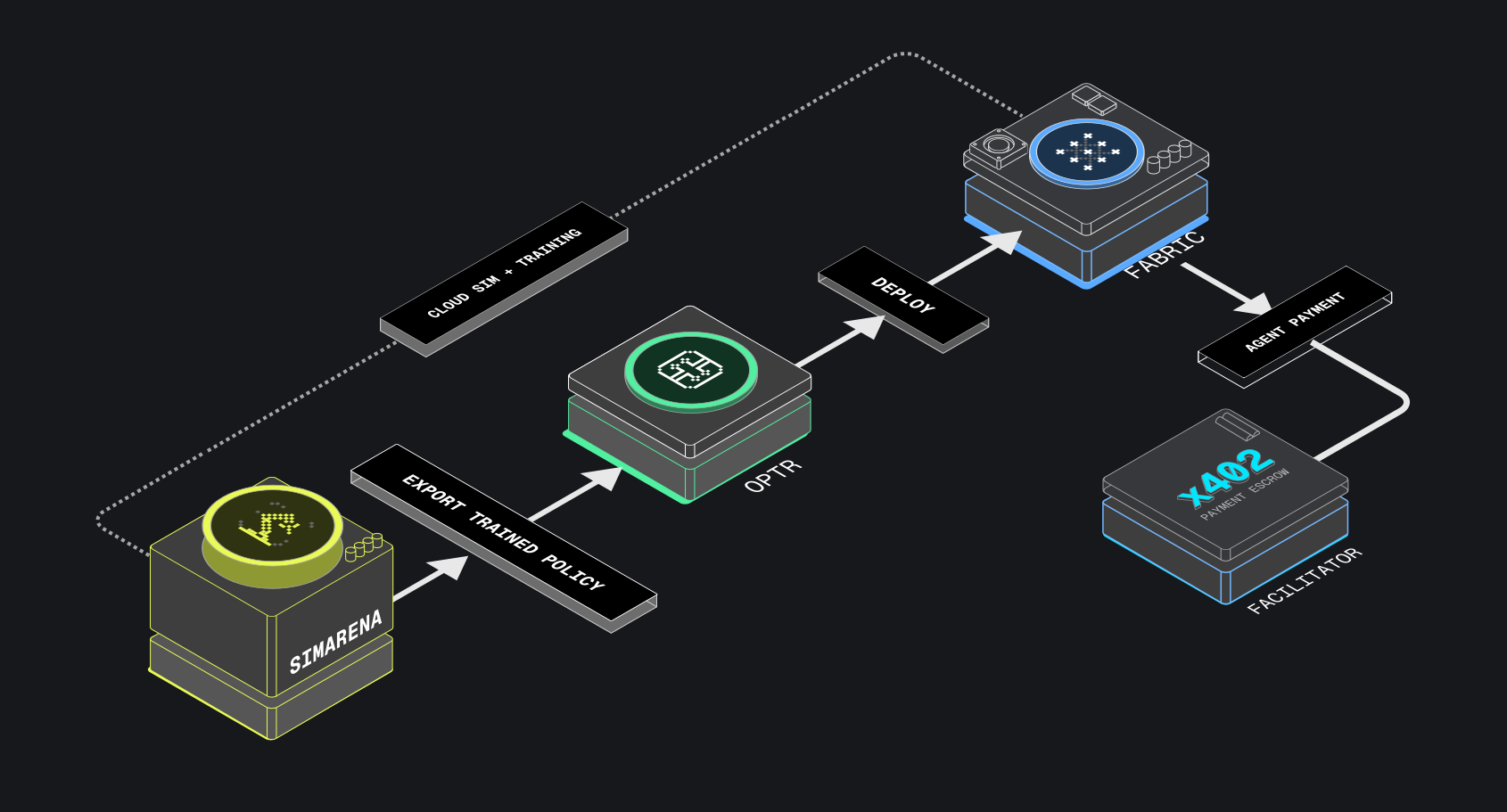
It gives builders one connected system for the machine lifecycle: simulate, train, deploy, monitor, and improve robots. Instead of each team building its own glue between simulators, datasets, compute, runtimes, and hardware, CodecFlow provides the shared rails.
Think of it as Vercel for robotics.
The current problem
Section titled “The current problem”Robotics is still stuck in “Robot Island.”
Every robot project ends up as its own island of formats, scripts, simulators, datasets, control code, deployment tools, and hardware-specific assumptions. A team building a warehouse arm, a humanoid, or an autonomous vehicle often rebuilds the same infrastructure from scratch.
The hard part is not just running a simulation. It is getting the whole loop to work:
- turn robot designs into usable models
- create realistic test environments
- run simulation at scale
- collect useful training data
- train and evaluate policies
- deploy robot brains across edge and cloud
- monitor what happens after deployment
- reward contributors who improve the stack
Today, those pieces are scattered across local tools, cloud scripts, research repos, and one-off internal systems. That slows down serious teams and keeps new builders out.
How CodecFlow solves it
Section titled “How CodecFlow solves it”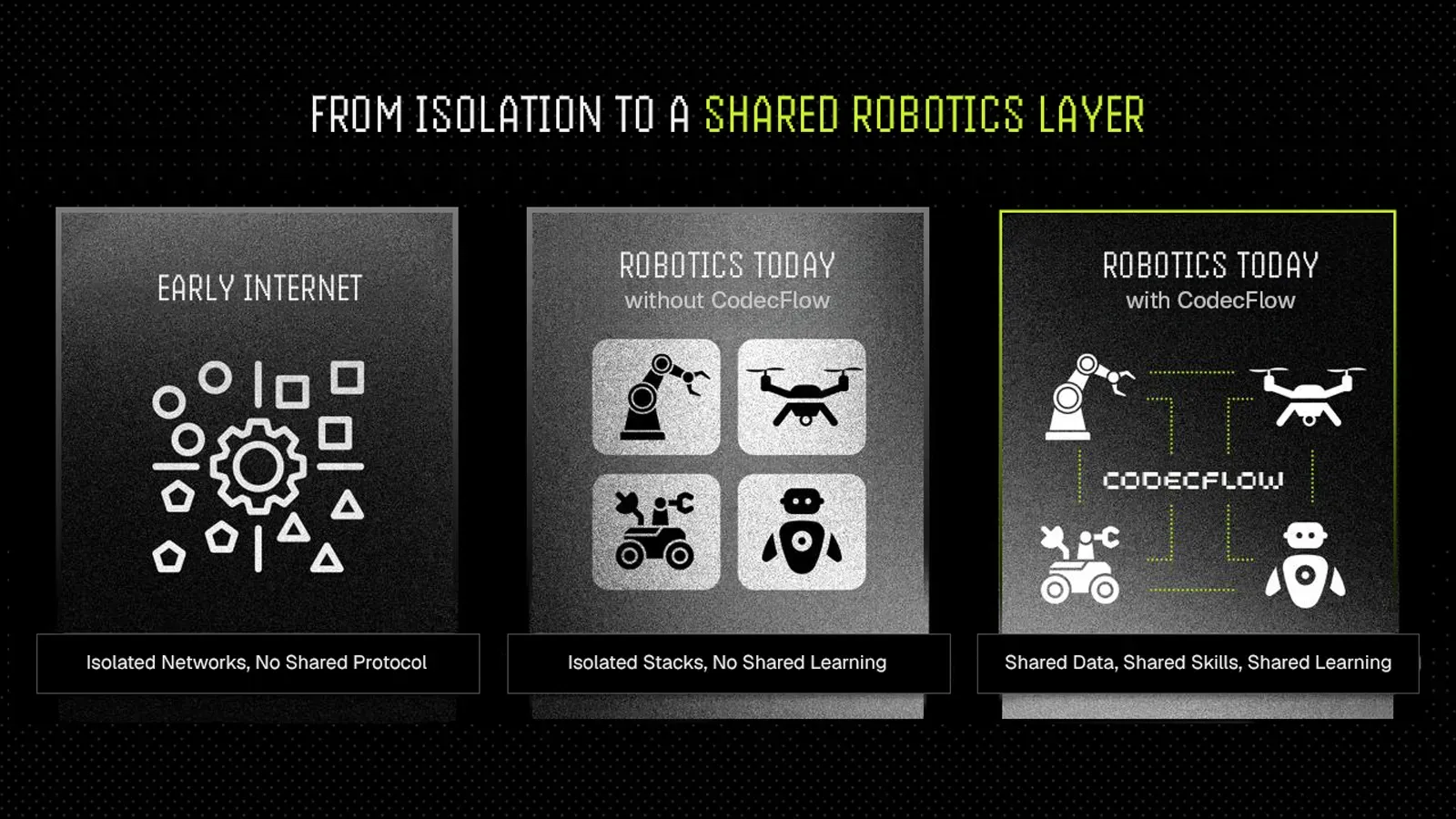
CodecFlow turns that fragmented workflow into one open stack.
SimArena gives builders a browser workspace for robot models, scenes, simulation, data capture, and training workflows. Fabric provides compute for heavier simulation, training, and runtime jobs. optr connects perception, reasoning, and action into deployable robot programs. The ecosystem layer connects contributors, usage, funding, and rewards around the same infrastructure.
The goal is simple: make robot development feel like building software on a modern cloud platform instead of rebuilding the platform every time.